

Introduction
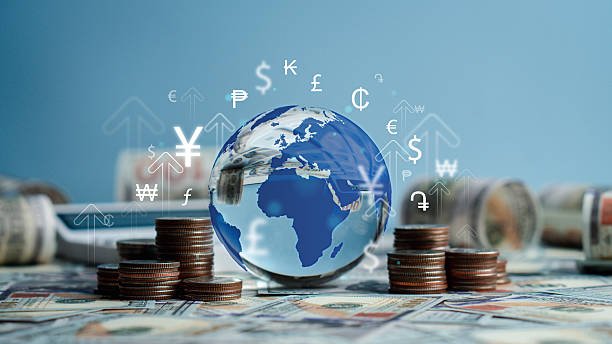
The world is a globalized place. It links countries, businesses and people in a manner never witnessed before. Globalization has touched every aspect of our lives in terms of clothes we wear and food we consume. But what is globalization? What is its influence on our present economy? This paper delves into the idea further and discusses its advantages, issues and how it has affected the world today.
What Is Globalization?

Globalization means the increased interdependence of the world. It entails the movement of goods, services, ideas and cultures in and out of the borders. Technological progress, trade and communication have enhanced this process. Imagine a global web, that connects economies and societies in ways that were impossible to conceive 100 years ago.
The economy in the modern world is based on globalization. It enables businesses to enter new markets, consumers to have access to varied products and ideas to free flow. But it’s not just about trade. Jobs, innovation and even politics are all affected by globalization.
The Major Globalization Forces.
Globalization is driven by a number of factors. Technology is a major driver. Global trade has been facilitated by the internet, smartphones and speedy shipping. As an illustration, a small Indian business is now able to market the handmade products to the United States customers by a few clicks.
Trade accords as well are also contributory. The trade barriers are eliminated by deals such as the North American Free Trade Agreement (NAFTA) or the single market of the European Union. This helps to motivate nations to collaborate. The world bodies such as the World Trade Organization (WTO) also establish the regulations that facilitate the process of trade.
Another influence is the development of transport. Goods are transported to different locations at a cheaper rate than before and are transported by cargo ships, airplanes, and trains. This implies that a smartphone developed in California can be produced in China and be sold to people all over the world in few days.
The Advantages of Globalization.
The modern economy has been transformed in a positive manner because of globalization. We are going to discuss some of its greatest advantages.
Increased Economic Growth
Economic growth is enhanced by globalization. By trading, the countries can specialize in doing what they do best. As an example, Brazil is a major producer of coffee and Japan has been a major producer of electronics. Trading is beneficial to the two countries. This division makes it more efficient and it expands economies.
Data supports this. The World Bank found that the world enhanced its GDP so much because trade barriers were eliminated in the 1990s. The speed of growth was higher in the developing countries, especially as they entered the international market.
Availability of Different Goods and Services.
Due to globalization, consumers are able to make more options. You can purchase Italian wine, Japanese auto or Indian spices at your local store. This diversity enhances the living standards. It also compels companies to be innovative to remain competitive. Indicatively, the smart phone brands keep introducing new features to appeal to customers all over the world.
Creating Jobs and Opportunities.
Globalization creates jobs. MNCs such as Apple or Nike establish businesses in nations that have cheaper labor. This becomes a source of jobs in locations such as Vietnam or Mexico. Simultaneously, it lowers the cost of production which is beneficial to the consumers as they have lower prices.
It also creates opportunities of skilled workers. An Indian software engineer may remotely work in a London-based company. This is a workforce that is empowered worldwide.
Exchange and Innovation of Culture.
Globalization is not all about economics. It promotes the sharing of culture. Ideas, art, and traditions were transmitted across borders. Yoga, a form of Indian yoga, is practiced in the world now. This interaction gives rise to inventiveness and innovation. Different cultures are learnt by businesses, which give rise to new products and services.
The Challenges of Globalization
Although globalization has numerous advantages, it also has its difficulties. Knowing these negatives makes us get the entire picture.
Economic Inequality
The rich and poor can be further separated by globalization. Large economies and companies are the ones to gain most out of the rich countries. An example would be that large firms might be able to dominate markets and local firms will struggle to compete. This has the potential to cause loss of jobs in certain areas.
Wage pressure occurs to workers in developed countries sometimes. The factories can relocate to other nations where labor is cheap leaving the local workers jobless. This occurred in the manufacturing industry in the U.S. when the jobs were sent to Asia.
Environmental Impact
Globalization may be a negative influence on the environment. Trade also generates carbon emissions in increased trading. Other factories in the least regulated countries can pollute more. An example is fast fashion, which has been dependent on the global supply chains and leads to waste and pollution.
The solutions ar,e however, promoted by globalization. The international treaties such as the Paris Climate Accord encourage international collaboration in addressing environmental problems.
Loss of Cultural Identity
With the mixing of cultures, there is the fear of the disappearance of the local traditions. International brands such as Starbucks or McDonald’s have the potential to drown out local companies. Smaller groups might not be able to maintain their own identities. As an illustration, the indigenous crafts could lose their importance when duplicate versions produced on large scale enter the market.
Reliance on the International Markets.
The result of globalization is the interdependence of economies. This can be risky. When a crisis occurs in one country, it can be spread across the globe. A good example is the 2008 financial crisis. This began in the U.S. but had an impact on banks and businesses all over the world. Heavily export-dependent countries such as China are susceptible to changes in demand in the global world.
How Globalization Shapes Key Industries
Globalization has its effect on different sectors. Let us consider its effect on some of the key industries.
Technology and Innovation
The technology business is globalized. Such companies as Google and Microsoft are global and share knowledge and resources. Innovation is a result of global talent pools. Exemplarily, engineers in India, China and Europe have been employed in Silicon Valley and are producing innovative products.
Another example is the open-source software. The users across various nations are benefiting from work of developers such as Linux.
Production and Supply Chains.
The revolution of manufacturing brought about globalization. Firms establish networks of suppliers in different nations in order to reduce expenditure. An example of this is that a car could be produced with some parts manufactured in Germany, assembled in Mexico and sold in Canada. This productivity reduces the costs but complicates the supply chains. The 2020 pandemic revealed weak spots within global supply chains.
Agriculture and Food
In the case of agriculture, globalization changed it. Exportation of crops is by countries that produce them optimally. As an example, U.S. supermarkets have an avocado as a staple product of Mexican origin. Nevertheless, this dependency may cause problems. Food prices in other countries will be influenced by droughts or trade disputes in one country.
Future of Globalization in the Economy
What will happen to the globalization? A number of trends propose that its impact will only increase, though in a different manner.
Digital Globalization
The next frontier is the digital economy. E-commerce, distance employment and online services are growing. Online stores such as Amazon and Alibaba are bringing buyers and sellers together all over the world. This trend also allows even small businesses to go global without necessarily leaving their hometowns.
Sustainable Globalization
Sustainability is emerging as an issue. Shoppers require environmentally-friendly products, which compel businesses to redesign the global supply chains. Ethical sourcing, e.g. brands such as Patagonia, are one example. The globalization that will come tomorrow will probably be more profitable and environmentally friendly.
Regionalization versus Globalization.
Certain scholars expect the transition to regionalization. Trade conflicts and pandemics have made the countries center their attention on local supply chains. As an example, the U.S and Europe are investing in the manufacture of chips within their home countries. Nonetheless, the process of globalization is not going to turn out to be an unnecessary factor since no nation can be completely self-sufficient.
How Individuals Can Adapt to Globalization
Globalization has an impact on everybody. Here is the way to find your way through its opportunities and challenges.
Preparing a Global Workforce.
Frequently, jobs are getting global. Socialization may be a gateway to learning how to code, do digital marketing, or even learn a foreign language. Courses such as those offered at Coursera are available online to enable you remain competitive.
Promoting Ethical Businesses.
Consumers have power. Buying brands that aim at sustainability and equitable labor practices can be a catalyst of change. As an illustration, the purchase of fair-trade coffee helps farmers in third world nations.
Cultural Diversity.
Globalization brings individuals closer. For this purpose, experience with other cultures, either through travelling or the immediate communities, adds value to lives. It also creates knowledge in a globalized world.
Conclusion
We live in an era of globalization and this phenomenon is really defining our modern economy. It spurs development, opens up possibilities and encourages innovation. However, it is also associated with such problems as inequality and environmental issues. Through appreciating its influence, we are able to enjoy its advantages whilst managing it disadvantages. Globalization has an impact on you whether you are a business owner, a worker or a consumer. It is important to take advantage of its opportunities and adapt to its challenges in order to succeed in the contemporary interconnected world.