

Introduction to Full Body Workout
The one who is ready to change your exercise life? The best method of increasing strength, endurance, and health is through a complete body exercise. This is the total body solution that hits all the leading muscles. It suits both the novices and experienced fitness lovers. Full body exercises have got the time when you are in a hurry and need the most out of your workouts. We will take a plunge into the reasons why this type of training is a game-changer and when you can begin.
What Is a Full Body Workout?
A fit body workout involves the use of all the major muscles in a session. Consider legs, back, chest, arms, and core. This method targets everything in one day, unlike split routines that target a particular muscle per day. It’s efficient and effective. You also save on time and develop strength and stamina. Whole body exercises are flexible, and they can fit even in hectic work schedules. They are perfect to every person who wants to have balanced fitness.
Advantages of Full Body Workouts.
What is the reason to go with a full-body workout? The benefits are endless. To begin with, it burns the maximum of calories. The more muscles are engaged, the more energy is used. This helps to lose weight and burn fat. Second, it enhances muscle balance.
You do not train a particular area too much and forget the other one. Third, it improves cardiovascular well-being. There are a great number of exercises that increase your heart rate. Plus, it’s time-efficient. You can get a full-fledged exercise in less than an hour.
Functional fitness is also boosted through full-body workouts. In movements, there are simulations of real-life activities, such as lifting or climbing. This develops realistic power. They’re adaptable, too. You may employ bodyweight, dumbbells or gym machines. It is not surprising that full-body workouts are popular amongst fitness enthusiasts.
Who Should Try Full Body Workouts?
A full-body workout is beneficial to anyone. Novices appreciate the convenience. You are taught essential moves without excessive drills. Time-starved workers like these value productivity. You don’t need hours at the gym. Cross-training is performed by the use of full-body workouts by athletes. They develop sporting strength and stamina. These workouts can be adapted by even the seniors. Lightness versions enhance fitness and power without injury.
Are Full Body Workouts Safe?
Against all odds, when properly done. Proper form is key. Begin with light weights or body weight exercises. Pay attention to the technique to prevent injury. Warm-ups and warm-downs are important. They are muscle-ready and a soreness reliever. Always listen to your body. Rest if you feel pain. Safety can be ensured through a guide by a trainer to beginners. Whole body exercises are safe but high-paying.
How to Structure a Full Body Workout
It is not difficult to develop a body workout. Goal of 3-5 exercises/session. Add motions to every group of muscles. Pushing and pulling balance exercises. This will bring about balanced development. Take 3-4 sets of 8-12 repetitions each exercise. Rest 60-90 seconds between sets. Work out 2-3 times per week. This enables the recovery and the progress.
Full Body Workout Routine: Sample.
This is a non-intensive body exercise routine. No gym? No problem. It is a workout that requires very little equipment and bodyweight.
- Warm-Up (5-10 Minutes)
- Jog in place: 2 minutes.
- Arm circles 30 s per side.
- Bodyweight squats: 10 reps.
- Dynamic stretches: 2 minutes.
Main Workout
- Squats (Legs, Glutes): 12 reps 3 sets.
Stand tall. Bend down until your thighs are at right angles. Push back up. - Push-Ups (Chest, Arms): 3 sets 10-12 reps.
Keep your body straight. Lower your chest to the floor. Push up. Modify on knees if needed. - Bent-Over Dumbbell Rows (Back, Arms): 3 sets: 12 reps.
Hinge at hips. Pull dumbbells to your sides. Lower slowly. No dumbbells? Use water bottles. - Plank (Core): 3 sets of 20-30 seconds.
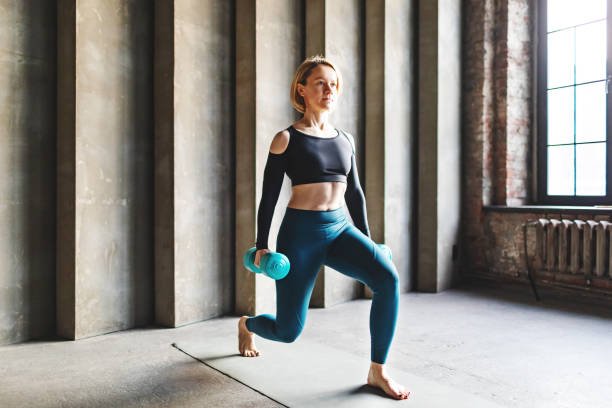
Increase the straight line between the head and heels. Engage your core. - Lunges (Legs, Glutes): 10 reps on each leg, 3 sets.
Step forward. Lower your back knee. Push back to start.
Cool-Down (5 Minutes)
- Stretching of the hamstring: 30 seconds each leg.
- Chest opener stretch: 30 seconds.
- Deep breathing: 1 minute.
This routine strikes all muscle groups. Add or make reps or weights harder as you get better.
Full Body Workouts Equipment
You do not require expensive workout equipment to have a full-body workout. Body weight exercises are miracles. Consider push-ups, squats, and planks. Want to level up? Resistance bands or dumbbells are added. Kettlebells are ideal in dynamic practices. A yoga mat helps with comfort. In case you are in a gym, you should employ barbells or machines. Consistency is the key and not the equipment.
Bodyweight vs. Workouts with weight.
Bodyweight exercises are available. They are not costly, and do not need a gym. You gain strength through your own body. Resistance is brought in by weighted workouts. This speeds up muscle growth. They are both good in training the full body. Decide depending on your objectives and funds. Mix them for variety.
Establishing Frequency of Full Body Workouts?
Frequency is based on your objectives. Newcomers are to target 2-3 sessions every week. This develops power without fatigue. Young lifters are able to perform 3-4 sessions. Professional athletes may work out 4-5 times, and lighter ones. Rest days are vital. They enable muscles to relax and develop. Overtraining results in exhaustion or harm. Listen to your body.
How to recover after full-body workouts.
As much as it is the workout, recovery is important. Get 7-8 hours of sleep nightly. Sleep repairs muscles. Eat protein-rich foods. Think chicken, eggs, or beans. Stay hydrated. Water helps the muscles to work. Exercise the body to become more flexible. Foam rolling decrease tightness. Rest days enhance long term improvement.
People Also Ask
What is the length of time to spend on a full-body workout?
Exercising a whole body would last 45 -60 minutes. This involves warm-ups, body activities and cool-down. Short on time? Even a 30-minute session has its results. Concentrate on such effective compound movements as squats or push-ups.
Is it possible to do full-body workouts on a daily basis?
Full body workouts are not good daily. The muscles require 48 hours to rest. Keep to 2-3 sessions a week when one only starts. Advanced lifters are capable of doing 4, with diverse intensity. Rest days eliminate burnout and injury.
Do full-body exercise workouts help in losing weight?
Yes! Whole body exercise is more calories as compared to isolated exercise. They increase metabolism and gain muscle. Muscle burns more calories during rest. Use with a well-balanced diet.
When is the most appropriate time to have a full-body workout?
It is most appropriate when you are feeling energetic. Exercises in the morning get your day going. Evening classes ease the pressure. Remedy is more pertinent than time. Choose a program that you will adhere to.
Common Mistakes to Avoid
Even the most effective full-body workout can be useless in case of wrongdoing. First, don’t skip warm-ups. They prevent injuries. Second, avoid poor form. It causes a decrease of efficiency and a threat of damage. Third, don’t rush. Slowing down, deliberate movements are more effective. Finally, don’t overtrain. Rest is crucial for growth. Place more emphasis on quality and not quantity.
Tips for Success
- Determined Objectives: Desire strength or stamina? Customize your entire body exercise.
- Record Progress: Record reps, sets or weights. It keeps you motivated.
- Change It Up: Vary exercises after every 4-6 weeks. This prevents plateaus.
- Be Consistent: Consistency in workouts is the best.
- Yield Advice: An instructor or an artificial intelligence can perfect your style.
Complete Body Exercises for the various objectives
Whole body exercises readjust to the objective. To build strength, use heavy weights and fewer reps. To be enduring, have more reps but use lighter weights. To lose weight, add cardio burst exercises such as jumping jacks. To be able to bend, involve yoga-like poses. Make your entire body workout to suit your vision.
At-Home vs. Gym Workouts
Full body exercises at the comfort of home are convenient. Minimal or body weight training. They are very user-friendly or time-saving. There are additional tools provided by gym workouts. There are barbells, machines and cables. Both work equally well. Select what suits your way of life.
Why Full Body Workouts Are Sustainable
The success of fitness is based on sustainability. Complete body exercises are not hard to keep up with. They are fast, multifaceted and efficient. You don’t need hours daily. They fit into busy lives. Plus, they keep you engaged. Variety prevents boredom. A complete body workout is a lifetime fitness solution.
Conclusion
Exercising is the key to healthy living. It is powerful, fat-burning and time-saving. Any person is able to do it, from beginners to professionals. Simple exercises should begin with. Concentrate on shape and regularity. Grow, put weights on, and diversify. Your athletic potential is there. Take the first step today. Your body will thank you!