


Introduction
It is an exciting way to start out in a small business. It has got a vision, a plan, and a dream to be big. However, all businesses have risks. Risks can derail your success in the case of financial losses to any other disturbance that you have not anticipated. Risk management comes in there.
It is about finding, evaluating, and planning upcoming issues prior to their strike. In the case of small businesses, risk management can be an issue that spells the difference between success and failure. This paper presents some risk management practices specific to small businesses. And now, let’s get down to business and see how to defend your business.
What Is Risk Management?

Risk management is the procedure of recognizing, examining as well and responding to hazards that may damage your business. These dangers may be financial, operational, legal, and even reputational. Small businesses should take risk management seriously since most of them cannot afford significant losses. Consider risk management as insurance of your business in the future. It is not all about getting rid of risks it is impossible. Rather, it is a matter of reducing the effects of their influence.
Why Small Businesses Need Risk Management
Small enterprises have their own problems. Small teams, small budgets and narrow margins do not allow much room to make mistakes. One lawsuit, one cyberattack, one problem of the supply chain is disastrous.
The study conducted by the U.S. Small Business Administration suggests that 25 percent of businesses fail to reappear following a significant disaster. Risk management helps to be ready. It creates a strong backbone and enables your business to withstand the storm.
Types of Risks Small Businesses Face
It is time to examine the risks that small businesses face before delving into strategies. These assist you in developing a strong risk management plan.
Financial Risks
Financial risk refers to difficulties in cash flow, costs that are not anticipated or a recession. There is a case in point that a decrease in sales can creak your budget. The problem of a client who does not pay on time could also be a problem.
Operational Risks
Internal processes are the cause of operational risks. This category includes equipment failures, human mistakes, or supply chain failures. As an example, when one of your suppliers dies, your business may come to a complete halt.
Legal and Compliance Risks
There are legal and regulatory requirements that are to be observed by small businesses. Failure to do so can attract fines or lawsuits. To take the example, a restaurant that does not comply with the health codes may receive fines or be closed down.
Cybersecurity Risks
Cyberattacks are becoming a menace in the digital age. The data breach may reveal information about customers and harm your reputation. The reason is that small businesses are often targets since they might not have proper security.
Reputational Risks
Everything is your reputation. Your brand can suffer a blow as a result of a negative review, a social media scandal, or bad customer service. Indicatively, the customers can be forced out by a viral complaint.
Risk Management Strategies of the Small Business
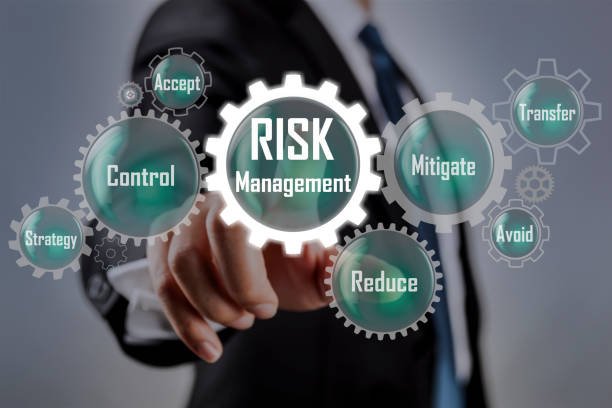
It is time to discuss the risk management strategies in practice, now that you are aware of the risks. These measures will help safeguard your business by ensuring it continues to run efficiently.
1. Identify Potential Risks
The initial phase of risk management is to be aware of what may go wrong. Carry out a risk analysis to identify possible risks. Visit your business activities. Examine each of the spheres, including: money, workforce, technology, and customers. Ask questions like:
- What would interfere with my supply chain?
- Do I have any of gaps in my cybersecurity?
- Do you think that a lawsuit can have an impact on my business?
To illustrate, a retail store may consider the risks to be shoplifting or inventory damage. List all the possible problems, however minor they may be.
2. Assess and Prioritize Risks
Not all risks are equal. The likelihood of occurrence of some of them is greater, and some of them have a greater impact. Access a risk matrix and assess every risk in accordance with its probability and intensity. An example is that a breach of cybersecurity can be less probable but disastrous in case it occurs. Conversely, a delayed client payment may be less frequent but less harmful. Give priority to high-impact and high-likelihood risks first.
3. Establish a Risk Management Strategy.
A risk management plan gives an overview of how you will be dealing with every risk. It is some kind of a guide to be safe. Your plan should include:
- Prevention strategies: Measures to minimize the possibility of a risk taking place.
- Mitigation measures: Measures that will reduce the effects in case a risk occurs.
- Response strategies: What to do in case a risk comes to reality.
Indicatively, a bakery can avoid financial risks by diversifying the sources of revenue, such as catering services and retail sales. In case one of the major ovens fails, one way of mitigating the situation would be to have a backup supplier of baked goods.
4. Invest in Insurance
Insurance is one of the pillars of risk management. It insures against the loss of money in case of some unforeseen events in the business. Small business insurance can be of the following types:
- General liability insurance: It protects the lawsuits or property damage or injury claims.
- Property insurance: Covers your tangible assets, such as your equipment or inventory.
- Cyber insurance: It covers data breaches or cyberattacks.
- Business interruption insurance: Assists in compensation of lost revenue in case your business is not operational.
An example of this is a professional liability insurance that is taken by a freelance graphic designer to compensate for mistakes in his/her work. Shop around and locate insurance companies that will offer affordable policies.
5. Strengthen Cybersecurity
The year 2025 does not allow any compromise to cybersecurity. Hackers are fond of small businesses. One violation would cost thousands and spoil your image. To secure your business, you need to do the following:
- Use powerful, specialised passwords for all accounts.
- Install antivirus programs and update.
- Educate the workers on how to detect phishing emails.
- Periodically copy data off to a safe cloud database.
As an example, two-factor authentication can be applicable in a small e-commerce shop to protect the accounts of customers. Cybersecurity investment is a pain reliever.
6. Establish effective Supplier Relationships
A small business can be brought down by supply chain disruptions. Take a scenario of a coffee shop that is out of its stock because its supplier closes down. To avoid this risk, diversify the suppliers. Don’t rely on a single source. Establish proper relations with various suppliers to become dependable. Enter into contracts that explain the schedules of delivery and the penalty of non-delivery.
7. Train Your Team
Your employees are your front line of attack. When a team is trained, it is capable of identifying risks at an early time and acting appropriately. Provide regular training on:
- Accident prevention measures in the workplace.
- Avoiding reputational risks through customer service.
- Adherence to market laws.
A construction firm may use such an example as teaching workers how to handle equipment properly to minimize injuries. Employees who are engaged are more likely to adhere to the risk management practices.
8. Ongoing Reviews and Monitoring of Risks.
Risks change over time. This may be because a strategy that is effective today may not be the same tomorrow. Establish a timetable to assess your risk management plan after every three months. Seek new risks, such as regulatory changes or new technology. Update your plan as needed. As an example, the entry of a new player into your market may be a reputational or financial risk.
9. Develop Crisis Communication Plan.
Communication plays an important role when a crisis strikes. A crisis communication plan will make you respond fast and efficiently. Describes who will address customers, employees or the media. Make templates of public statements. To illustrate, in the case of a product recall, an apology and action plan can be used to retain customers.
Real Life Case
Take the case of Jane who operates a small bakery. She was at considerable risk when her primary supplier of flour became bankrupt. Her business would go dead without flour. Jane was lucky; she had a risk management plan. She had already determined this risk and had formed good relationships with backup suppliers.
In a few days, she found herself another supplier and continued with her bakery. Another insurance that Jane had was business interruption insurance that paid her the losses in the transition. Her initiative helped her business to escape failure.
Top Ten Risk Management Pitfalls
Despite the intentions, small businesses may err. The following are some of the pitfalls to be avoided:
- Putting your head in the sand: Minimal problems may grow into massive ones.
- This is because of skipping insurance: It would be tempting to save money but insurance is worth it.
- Failure to update plans: Risks metamorphose, and thus should your plan.
- Insufficient involvement of the employees: Your team should be in it to win.
Summary
Not only the big companies have risk management. Small business requires it to survive and prosper. Some of the ways that you can safeguard your business against unforeseen issues are by risk identification, a good plan, and being proactive.
Begin big – perform a risk evaluation, ensure, and educate your staff. In the long run, these measures create a more robust, better-built business. Waiting until a crisis hits before you take action is not a good idea. Risk management will help you to ensure the future of your business as you take control today.